

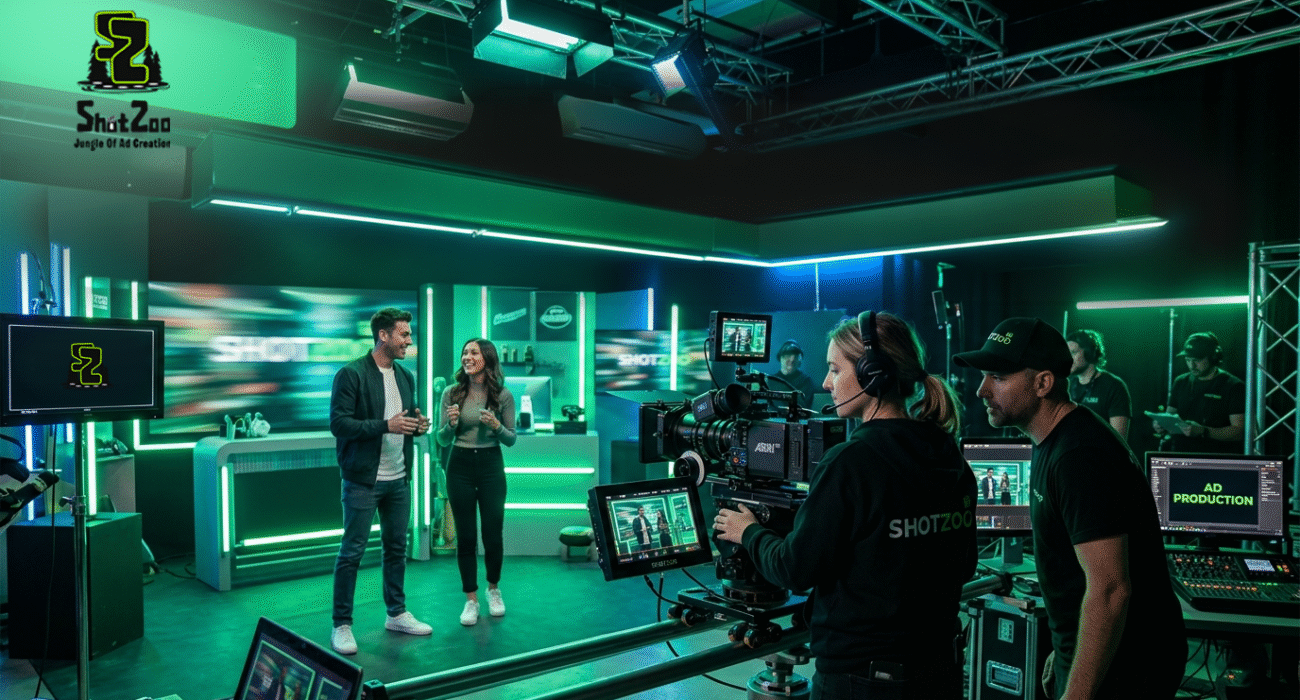
Beyond Airtime: How Strategic TV Ad Production Builds High-Impact Brand Visibility
Updated by: Shotzoo Production Team
- You can spot the difference between a placeholder TV spot and a brand-building commercial within seconds. Strategic tv ad production doesn’t start on set. It starts with clarity about what a brand must mean in a living room, on a phone, and during a cricket match. Done right, a single 30-second film becomes a multi-format asset that fuels reach, recall, and results.
- Strategic television ad production means aligning the creative idea with media objectives, planning pre‑production with discipline, capturing high-quality visuals and sound, and finishing with post assets that travel across TV, digital, and OTT. The core steps are brief and strategy, pre‑production, production, post‑production, compliance, and delivery, followed by amplification and measurement.
- TV ad production is the process of creating television commercials from concept to broadcast-ready delivery. It includes three main stages: pre-production (planning and scripting), production (filming and directing the commercial), and post-production (editing, sound design, VFX, and mastering the final ad). In India, TV advertisement production also involves meeting broadcaster technical specifications and advertising compliance guidelines.
Why Strategic Television Advertisement Production Matters
Across India, families still gather around TV screens for live sports, news, and prime-time drama. That shared attention is rare and valuable. Brands that treat television advertisement production as a strategic build, not a last-mile task, tend to get more than GRPs. They get trust, talkability, and a creative platform that stretches across channels. Industry playbooks consistently point to three things TV still does better than most channels: It confers credibility, concentrates attention, and creates cultural moments when creativity connects.
What is TV Ad Production in India?
TV ad production in India covers the end-to-end creation of broadcast-ready commercials. From the first brief to the final master, the process translates brand strategy into sight, sound, and story that meets broadcaster specs. In practice, TV ad production spans three phases. Pre‑production, production, and post‑production. Each has hard decisions that affect cost, quality, and measurability.
TV commercial production process: Stages Explained
Every strong commercial rests on disciplined flow. Cut corners in one stage and costs creep into the next. Build the right foundations, and the shoot feels calm even when the monsoon has other plans. The industry standard remains pre‑production, production, and post‑production.
Pre-production: research, scripting, casting, and planning
- Briefing and objectives: Lock one business goal and one human takeaway. Decide if the spot is a brand ad, product ad, or direct-response film. Each needs a different call to action.
- Creative development: Script, storyboard, and sometimes animatics to pressure-test timing and beats. Good pre-viz saves shoot hours.
- Budget and schedule: Align the concept with the means. A single-company set build, heavy VFX, or celebrity talent changes the math. Fix a realistic calendar with approvals baked in.
- Casting and locations: Performance sells the promise. Chemistry reads help. Scout for light, sound, permits, and practicality. A beautiful location where one can’t take a unit is a tax on morale.
- Crew and equipment: Director, DoP, line producer, production designer, 1st AD, gaffer, key grip, sound, stylist, HMU, art, and production management. Right tools matter, but time and taste matter more.
Production: direction, cinematography, and sound on set
- Direction and performance: Keep the intent clear. Performance beats props. Reserve takes the moment that matters.
- Cinematography: Compose for TV first. Protect the center cut where needed. Shoot clean plates for VFX and pack shots.
- Sound capture: Record sync sound when performance nuance matters. Protect against ambient noise. Grab wild tracks and room tones.
- On‑set discipline: Mark script notes. Back up media. Stick to the shot list, then allow one smart improv. Happy accidents often make the final cut.
Post-production: edit, VFX, music, and final masters
- Offline edit: Build the spine. Find the heartbeat shot. Cutdowns often start here.
- Design and VFX: Supers, infographics, product CG, compositing, and screen comps. Less noise, more clarity.
- Sound and music: VO, SFX, music selection or score, and final mix. Audio sells emotion. Loudness must match broadcaster norms.
- Grade: Unify mood, skin tones, and product color fidelity. Protect logo colors and pack accuracy.
- Masters: Create broadcast masters and a modular asset kit for digital and OTT. Label diligently.
Budgeting and Cost Drivers for a 30-second Commercial in India
There’s no single price tag because concept, ambition, talent, and execution choices change the curve. Indian 30‑second production budgets stretch from lean, local shoots into multi‑city, celebrity‑led films. Airtime is a separate line. The smartest path is to scope the idea to the outcome, not to a generic rate card.
Major Production Cost Drivers and Typical Impact
Driver | What changes cost | Budget impact |
Concept complexity | Number of locations, set builds, stunts, heavy VFX | High |
Talent | Celebrity fees, exclusivity, usage duration and territories | High |
Shoot days and unit size | Extra days, multi‑camera crew, specialty gear | Medium–High |
Post‑production | Advanced CG/VFX, intricate design, multiple language versions | Medium–High |
Music | Popular track licensing vs original score | Medium |
Contingency | Weather holds, reshoots, last‑minute compliance edits | Medium |
Creative Strategy for Creating TV Ads that Drive Brand Visibility
Effective tv advertisement production is less about cramming in features and more about shaping a memory. Make one clear promise, dramatize it with a human moment, and close with a simple action. That’s the craft. Then protect time for what most people will remember. The opening three seconds. The emotional pivot. The final brand mnemonic.
- Set the hook: The first frame should feel like the brand entering a scene, not a scene waiting for a logo.
- Make the product the hero: Product in hand, product in use, or product as solution. Avoid generic lifestyle wallpaper.
- Respect local context: Language versions, festival nuances, and regional casting are not add‑ons. They are strategies.
From idea to asset: modular tv ad creating for multi-format use
Think “idea to system”. A 30‑second hero, a 20‑second retail version, 10‑second bumpers, 6‑second teasers, and a library of clean pack shots, logo animations, and music stems. That’s modular tv ad creation. It keeps the story intact at every length and every ratio.
- Define the asset tree. List heroes, cutdowns, language dubs, CTAs, ratios, and end tags. Outcome: Shared understanding saves reshoots.
- Shoot for options. Enter and exit shots cleanly. Hold beats for alternate supers. Outcome: Flexible edits without awkward trims.
- Master the stems. Separate VO, music, and SFX. Outcome: Fast language swaps and platform‑specific mixes.
- Design a claims kit. Pre‑approved supers in all scripts. Outcome: Fewer compliance edits and on‑time delivery.
Cross-channel amplification
Television ads can be repurposed across digital platforms, OTT, and social media, maintaining brand consistency while adapting to each format. From vertical social videos to YouTube pre-rolls or OTT cutdowns, a single master film can serve multiple channels efficiently.
Compliance, Clearances, and Delivery Requirements for TV Ad Production in India
Compliance is not paperwork. It’s brand safety. In India, campaigns must align with ASCI’s Code and relevant sector guidelines, from health claims to financial disclaimers. Broadcasters issue tech spec sheets covering timecodes, slates, audio loudness, safe areas, and file formats. Build these into pre‑production so creative choices anticipate constraints. Editor‑verified.
TV advertisement production in India must follow ASCI rules for content, sector-specific guidelines, and broadcaster technical specifications, including HD formats, audio loudness, slates, and clock IDs. Music and talent rights must be properly licensed for usage and territory, ensuring campaigns are compliant and broadcast-ready.
TV Ad Production Company in India: How to Choose the Right Partner
Pick partners for thinking, not just kit. The right tv commercial production companies will ask sharp questions about outcomes, audiences, and the asset plan. Shortlist on relevant work, clarity of bidding, and calm project management. Then read how they handle contingency, compliance, and delivery. It’s a marker of experience.
- Match the brief: If the spot leans on performance direction, weigh reels where actors carry the frame.
- Ask for a production approach: Look for smart simplifications that protect the idea while controlling cost.
- Insist on a post-roadmap: Language versions, platform ratios, and supers planning should be part of the first bid.
Check references: Reliability on timelines, transparency on overages, and clear rights paperwork matter long after the ad airs.
FAQS
How much does a 30-second TV ad cost?
Production costs vary widely. Indian 30‑second films can range from lean local shoots to celebrity‑fronted, multi‑location productions. Drivers include concept complexity, talent, VFX, shoot days, and post. Airtime is separate and depends on network, slot, and seasonality. Start with objectives, then size the idea to fit.
Who produces TV commercials?
Commercials are produced by a mix of agency creative teams and tv ad production companies. A producer and line producer manage budgets and logistics. Directors, DoPs, editors, colorists, VFX, and sound specialists bring the spot to life. Media and traffic teams handle specs and delivery to broadcasters and platforms.
What are the general requirements for TV ad production?
Three pillars apply. A clear brief and script. Broadcast‑ready craft across picture and sound. Compliance and delivery per network specs, including slates, clock numbers, loudness, and file formats. Rights for music and talent must cover usage duration and territories. Build a modular asset kit for digital and OTT from the same master.
What are the three stages of TV production?
The three stages are pre‑production, production, and post‑production. Pre-sets the plan. Production captures performances and visuals. Post-turns footage into the final masters with edit, design, VFX, grade, and sound. This structure is standard across television advertisement production worldwide.
Conclusion
Airtime buys reach. Strategic TV ad production by an experienced TV ad production company earns attention, trust, and reuse. At Shotzoo, we transform a 30-second concept into a full-scale ad film production project that works across TV, digital, and OTT. The takeaway is simple. Lock the outcome, design modular assets, respect compliance, and choose partners who plan like strategists and shoot like filmmakers. Next step. Map your asset tree from a single core idea and brief partners to build it once and use it everywhere. That’s how a 30‑second spot becomes a long‑term brand asset.